

Last updated: May 2026
TL;DR: 2026 tariffs of 15 to 30 percent on electronics from China, Taiwan, and Southeast Asia pushed average laptop prices up $150 to $200, consoles up $100, and flagship phones up $150. Buy certified refurbished now or plan around major sale cycles to avoid paying full tariff-adjusted retail.
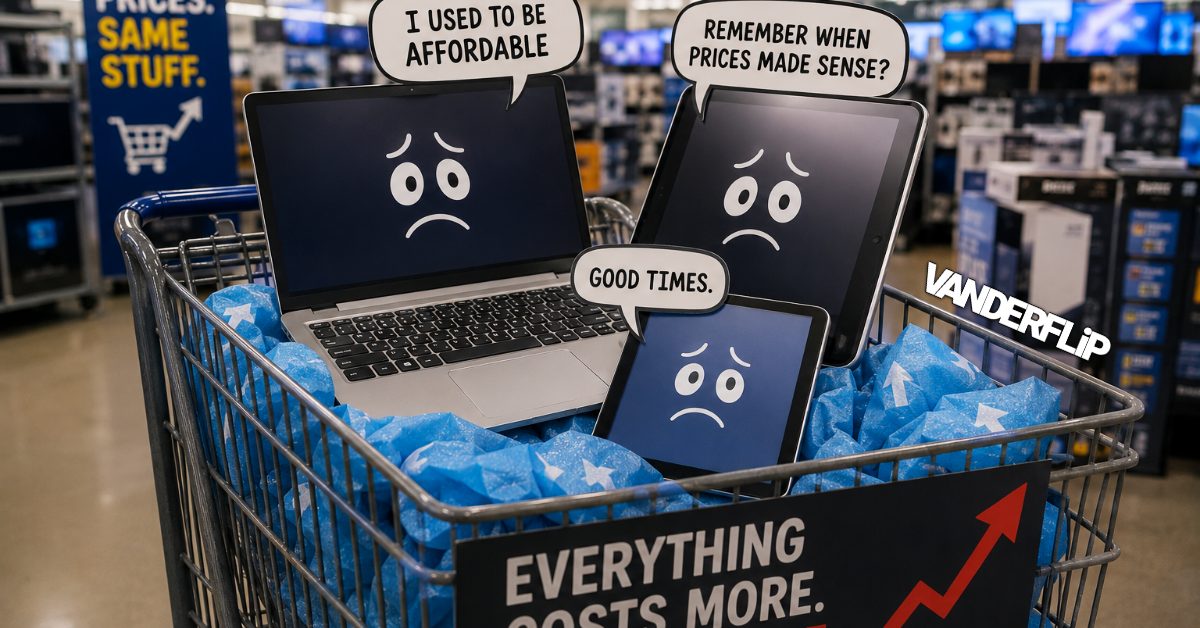
A laptop that cost $799 in 2024 starts at $999 now. Your game console went up $100. Your phone replacement costs $50 to $150 more than it did 18 months ago. The Consumer Technology Association’s 2026 Pricing Impact Report confirmed what anyone who bought a device this year already knows: tariffs of 15 to 30 percent on electronics imported from China, Taiwan, and Southeast Asia hit consumers directly, and the prices are not coming back.
The laptop category took the hardest visible hit. CTA data puts the average price increase at $150 to $200 across the segment. A mid-range Windows laptop that cleared $699 in 2024 now floors at $899. The budget tier got squeezed worst: a $399 Chromebook now runs $479 to $499 because manufacturers had less margin to absorb. Some brands, including Lenovo and HP, shifted partial production to Vietnam and India, which softened some increases, but not enough to hold old price points.
Gaming consoles are up $100 flat across all major platforms, according to NPD/Circana retail data from Q1 2026. The PlayStation 5 Slim moved from $449 to $549. The Xbox Series X moved from $499 to $599. Nintendo held the Switch 2 at $449 at launch by absorbing a portion of the increase, but accessories and bundles reflect the full tariff. If you are buying a console plus two controllers and a game, budget $650 to $700 minimum.
Flagship smartphones are up $50 to $150 depending on the manufacturer. Apple’s iPhone 17 Pro starts at $1,149, up from $999 for the 16 Pro at launch. Samsung’s Galaxy S25 Ultra opened at $1,349. Company earnings calls from Q1 2026 show most manufacturers passed roughly 60 to 70 percent of the tariff cost through to retail. Mid-range phones in the $400 to $600 range saw proportionally smaller dollar increases but the same 15 to 20 percent rate hit tablets hard, per CTA figures.
The refurbished market is responding. Demand for certified refurbished electronics surged 40 percent in early 2026, per Circana data. A refurbished iPhone 15 Pro from Apple’s own store runs $829, compared to $1,149 for a new 17 Pro. For smart device buying guides and value comparisons, the math on refurbished has never been more favorable than it is right now.
If you were planning to replace a laptop or console this year, the window for old pricing is closed. Buy refurbished certified, wait for a major sale cycle, or size down one tier and get more for the money than the flagship offers at its new price.
These prices are the new floor. The manufacturers who shifted factories already moved. The ones who did not are living with the margin hit or passing it to you. Either way, knowing exactly what you are paying for, category by category, is the only way to come out ahead.
FREQUENTLY ASKED QUESTIONS
How much did tariffs raise laptop prices in 2026?
The Consumer Technology Association’s 2026 Pricing Impact Report puts the average laptop price increase at $150 to $200, with budget models under $500 seeing the steepest proportional hit.
Are gaming console prices going back down in 2026?
No current indication points to a rollback. All major platforms, including PlayStation, Xbox, and Nintendo, are selling at prices $100 higher than pre-tariff levels, per NPD/Circana Q1 2026 retail data.
Is buying refurbished electronics worth it right now?
Demand for certified refurbished devices surged 40 percent in early 2026, and for good reason: a manufacturer-certified refurbished iPhone 15 Pro runs $829 versus $1,149 for a new iPhone 17 Pro, with identical warranty coverage.